Delivering AI Education to the kids in my community
I like giving back, and I loosely believe in karma. Not in a mystical sense, but in a “give what you get” sense. I don’t think it actually exists; I think it’s just pattern matching by human beings. However, it helps me cope with the world.
In the same way some people use religion as a justification for their suffering, I like the idea that rather than being just a little individual, you are part of a greater cosmic game. You don’t need to think too hard about everything going on in the cosmos because, frankly, it’s not looking good, so you just do your own thing. Even though I’m not religious, I find myself leaning on that thought process from time to time to justify how I’m spending my time and existence.
In addition to that, I’m a big believer in the Butterfly Effect and luck. Most people’s circumstances in life are a byproduct of a series of events rather than an innate self-worth. There is a component of effective positioning through effort, planning, and timing, this can move you into fantastic positions, but for every breakout success, there is a series of failures. The thing is, positioning yourself for success can be both intrinsic and extrinsic. Something done by yourself or done to you.
When you are a young person life is pretty out of your control. It’s very much extrinsic. You are at the mercy of your parents, teachers, and the opportunities available to you. It’s a period of your life where you’re at your freest, whilst having the least control.

Guess who the handsome fella in the middle is
Lately, I’ve been thinking about the effect AI will have on the world and the lack of education in lower-income environments (where I came from). There is going to be a huge skills gap. Since leaving school, a lot of the people I work with have come from heavily privileged backgrounds (I’m not saying that’s a bad thing, but it’s just a fact, literal children of billionaires have a minor leg up on us mortals). So it excites me to think that with the right tooling, in the right hands and with the right education, we can really help level the playing field.
I decided to bring this thought into reality. Who better to educate these students than someone who has sat in their very shoes? Probably a lot of people… but I think it resonates more when it comes from someone who once wore their same uniform.
I put in the effort to assemble a high-level curriculum, explaining the things that helped me position myself in a relatively decent spot. I titled the deck “It’s Easier Than You Think,” and it outlined an approach toward creation and consumption grounded in AI. Giving an approach to develop the skills to navigate a very quickly changing world.
To do this, I did some initial research. I messaged friends in my network who work with young people and asked: What do you do? How do you do it? What resources do you use? Who can you connect me to? With the best of intentions, it really made me emulate what it’s like to be a startup founder or an early-stage employee. People are keen to help, and in all honesty, they are happy to help, but you really have to wrangle them for the specific help you need. If I contacted 5 people, 1 would be a great fit, 2 would be interested but not available, 1 would be too busy, and 1 would be too complicated.
Once the initial wrangling and networking were done, I had a few thoughts in my head and a few numbers in my phone. I reached out to my old secondary school. As an alumnus, it was the easiest place to connect with from a credential standpoint. Once I had their attention, I presented my idea and they were very receptive. Shout out Ashae.
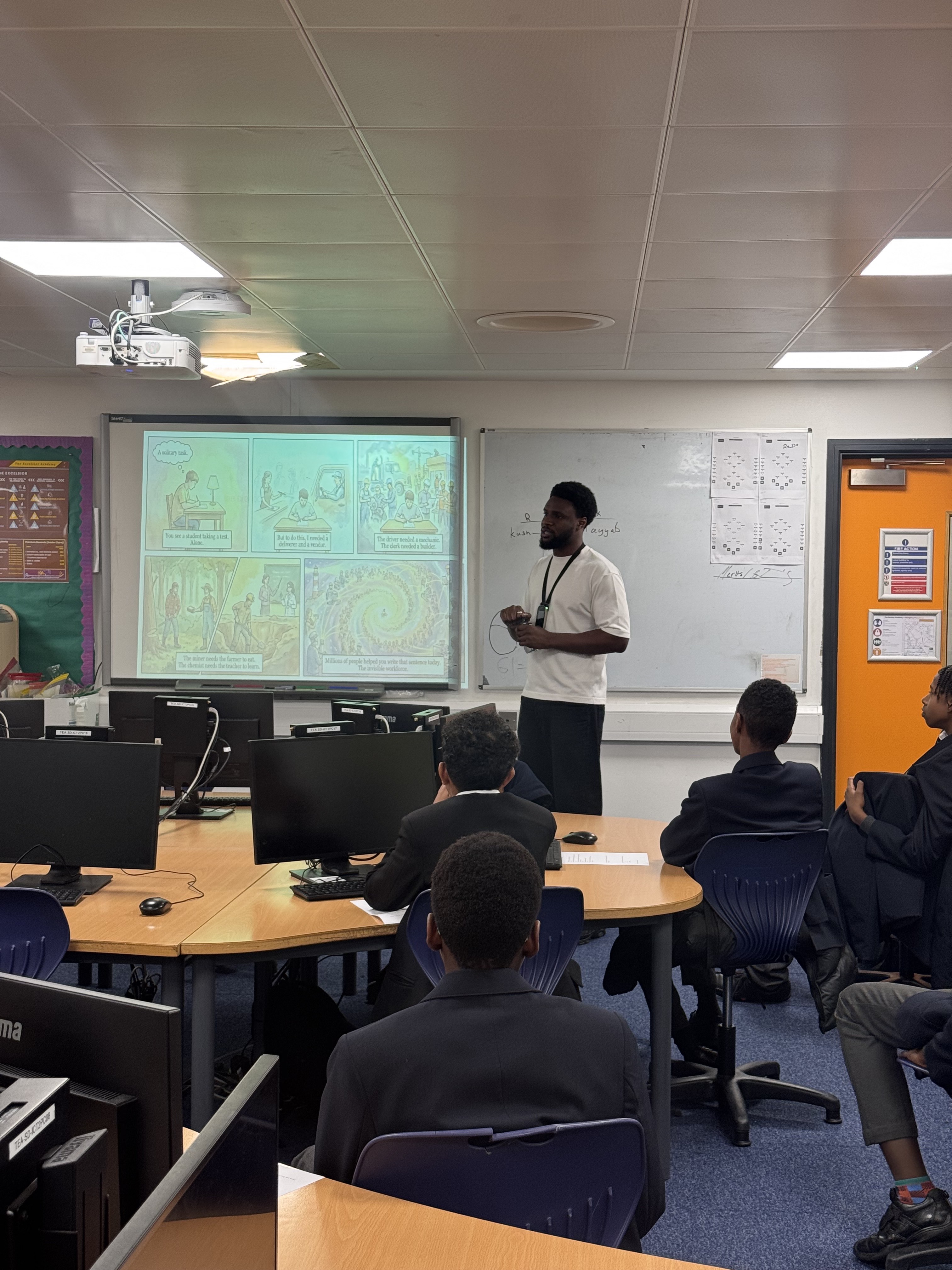
The session was a hit. I presented to Years 9, 11, and 12/13 in small sessions primarily aimed at Computer Science students. It was entertaining to be on the other side of the desk—seeing presentations, engaging with students, and answering their questions.
In all honesty, it was a surprisingly fun endeavor. Kids ask wild questions. One of my favourites of the day was: “Sir, can I use AI to make thirst traps?”
I brushed the question off with a laugh and moved on, but the answer is: Yes, you definitely can, though I would not recommend it. A session on ethical AI use and responsible creation would have been a great addition!
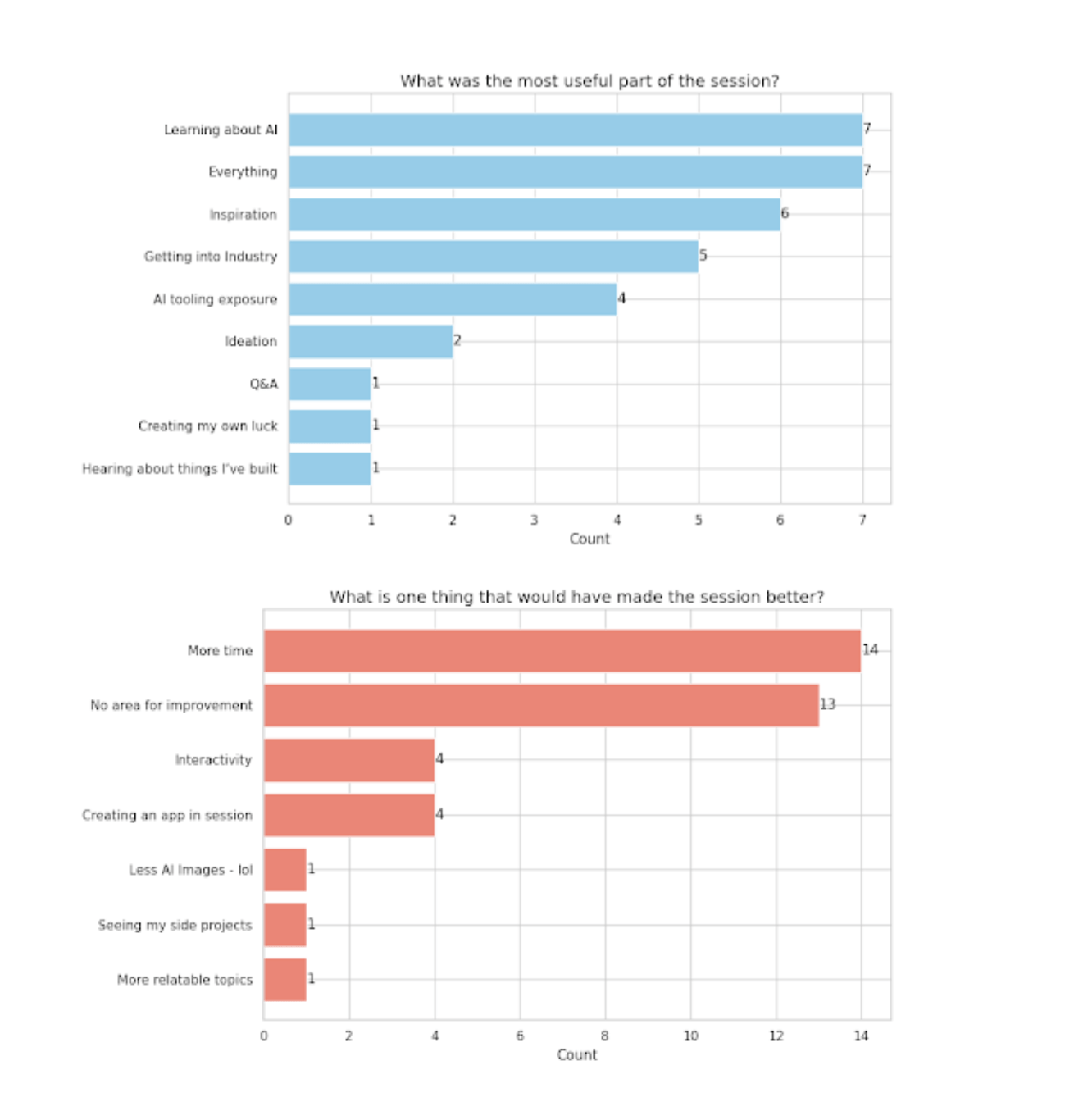
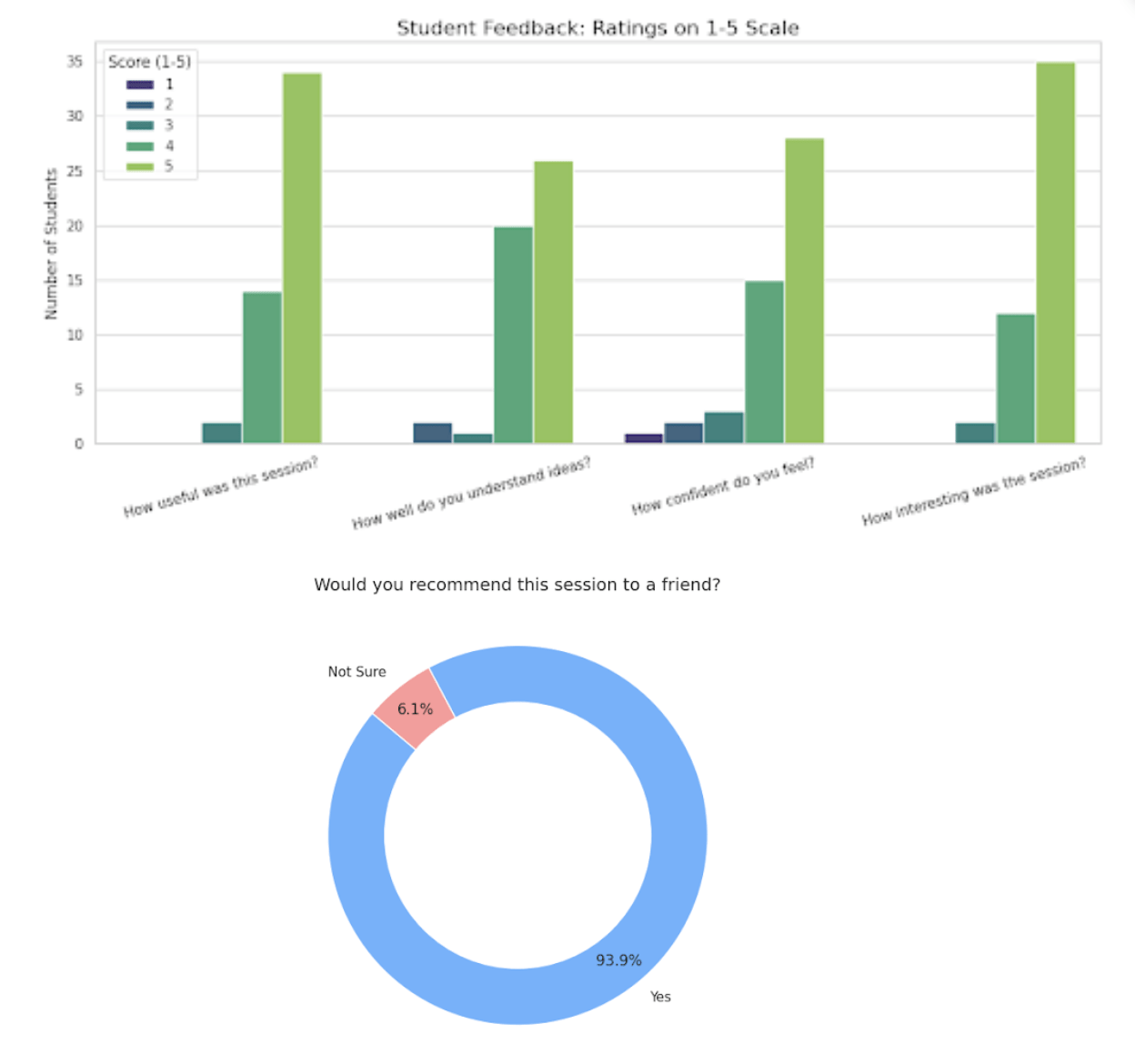
After each sessions I asked the students to fill out a quick feedback form. The results were encouraging, with most students rating the session as helpful and engaging.
If you come across a similar opportunity, don’t hesitate to reach out. I will happily share my deck and insights. It’s a great way to give back some time to the community.